
You are here
NYU Shanghai Launches Global Institute for Longevity and Resilience
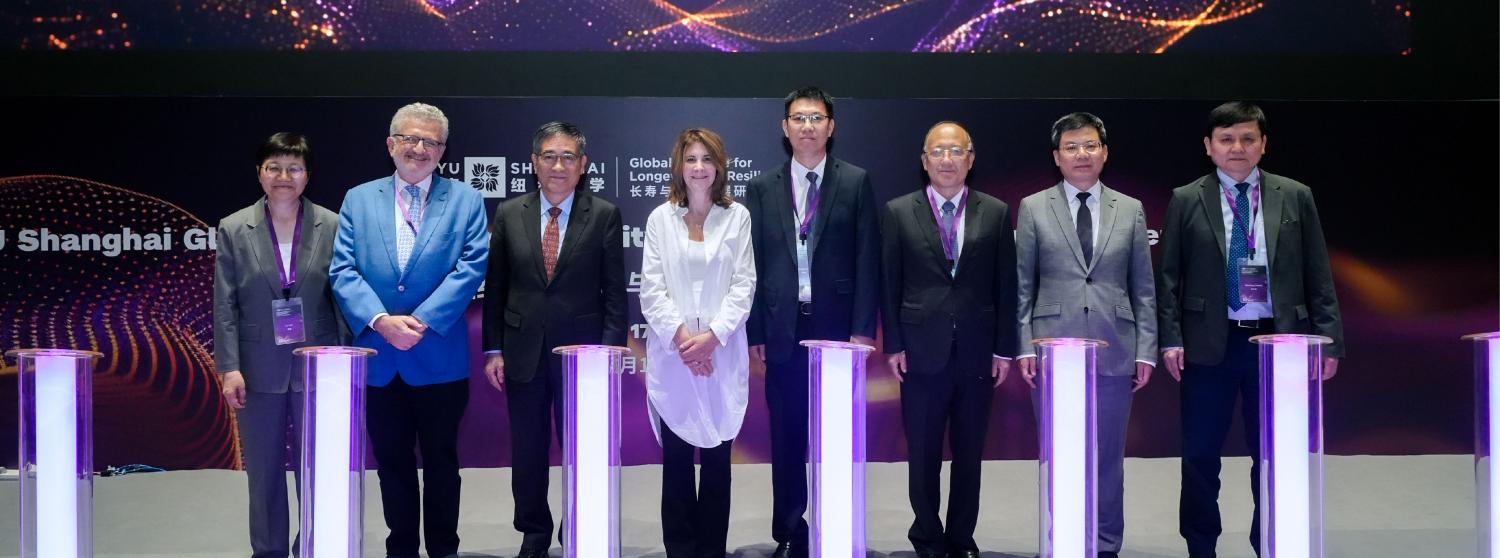
NYU Shanghai launched the NYU Shanghai Global Institute for Longevity and Resilience with its inaugural Longevity and Resilience Conference on September 17. Scholars, policy researchers, and industry representatives from China and abroad gathered to discuss how societies can advance healthy longevity and build greater resilience.
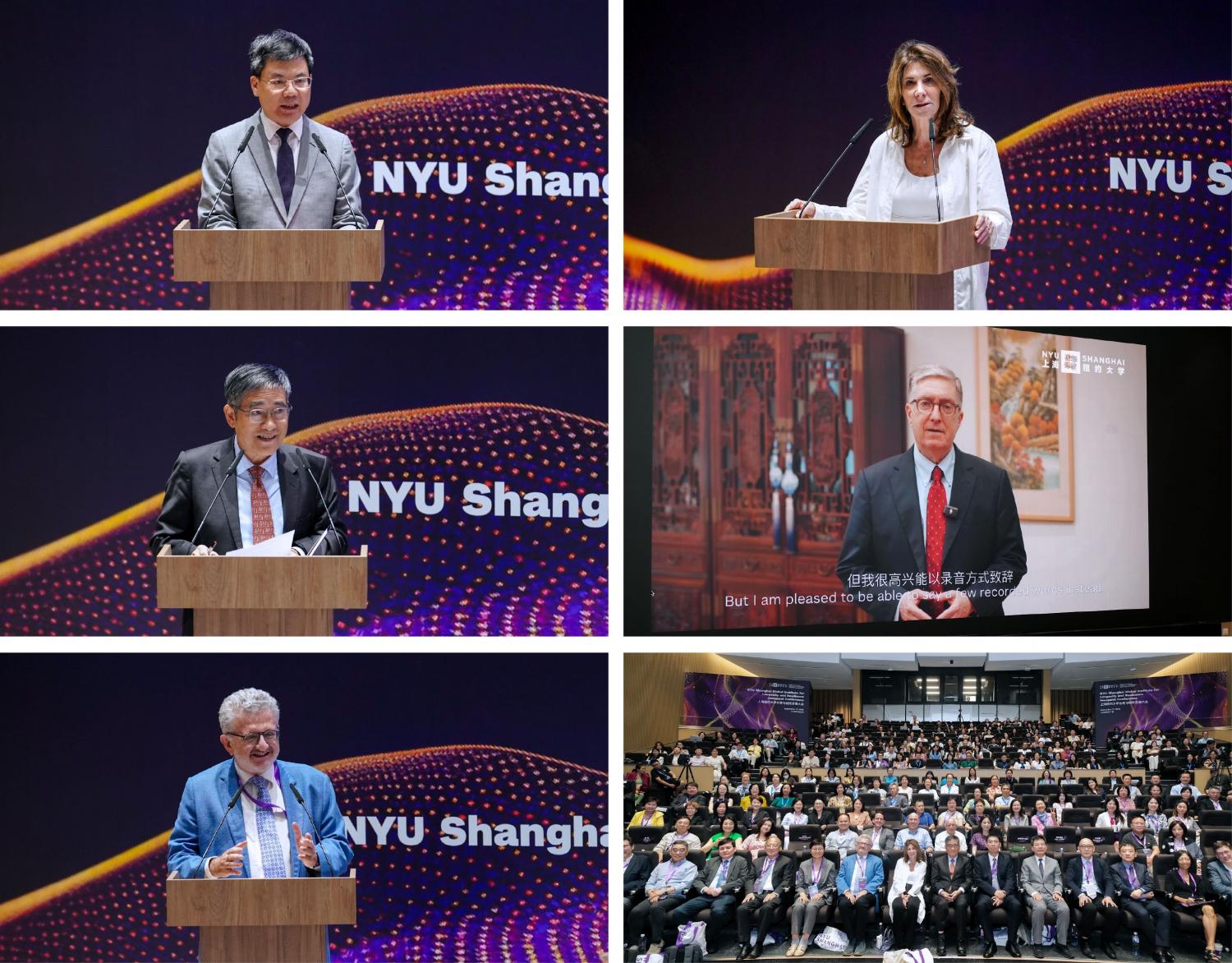
Top row: Left: Director of the International Exchange Division of the Shanghai Municipal Education Commission Zhou Qinjian Right: NYU President Linda G. Mills
Middle Row: Left: NYU Shanghai Chancellor Tong Shijun Right NYU Shanghai Vice Chancellor Jeffrey Lehman
Bottom Row: NYU Abu Dhabi Vice Chancellor Fabio Piano Right: Audiences
Against the backdrop of rising global life expectancy, NYU Shanghai established the Global Institute for Longevity and Resilience to bring together questions that have traditionally been studied separately across medicine, eldercare, urban planning, finance, and technology. The Institute will examine how individuals, families, communities, and cities can adapt to the changes brought by longer life expectancy.
The Institute will leverage on real-world research from Shanghai, across China, and Asia to connect academic research with policy, technology, and practice, while tapping into academic resources from NYU’s expansive global network. Its research focuses on four interconnected areas: Healthy Longevity and Life-Course Resilience, Earth Systems and Urban Resilience, Longevity Finance and Silver Economy, and Health Technology. Researchers from public health, the social sciences, psychology, neuroscience, urban and environmental studies, computer and data science, engineering, economics and finance, and public policy will work across these areas.
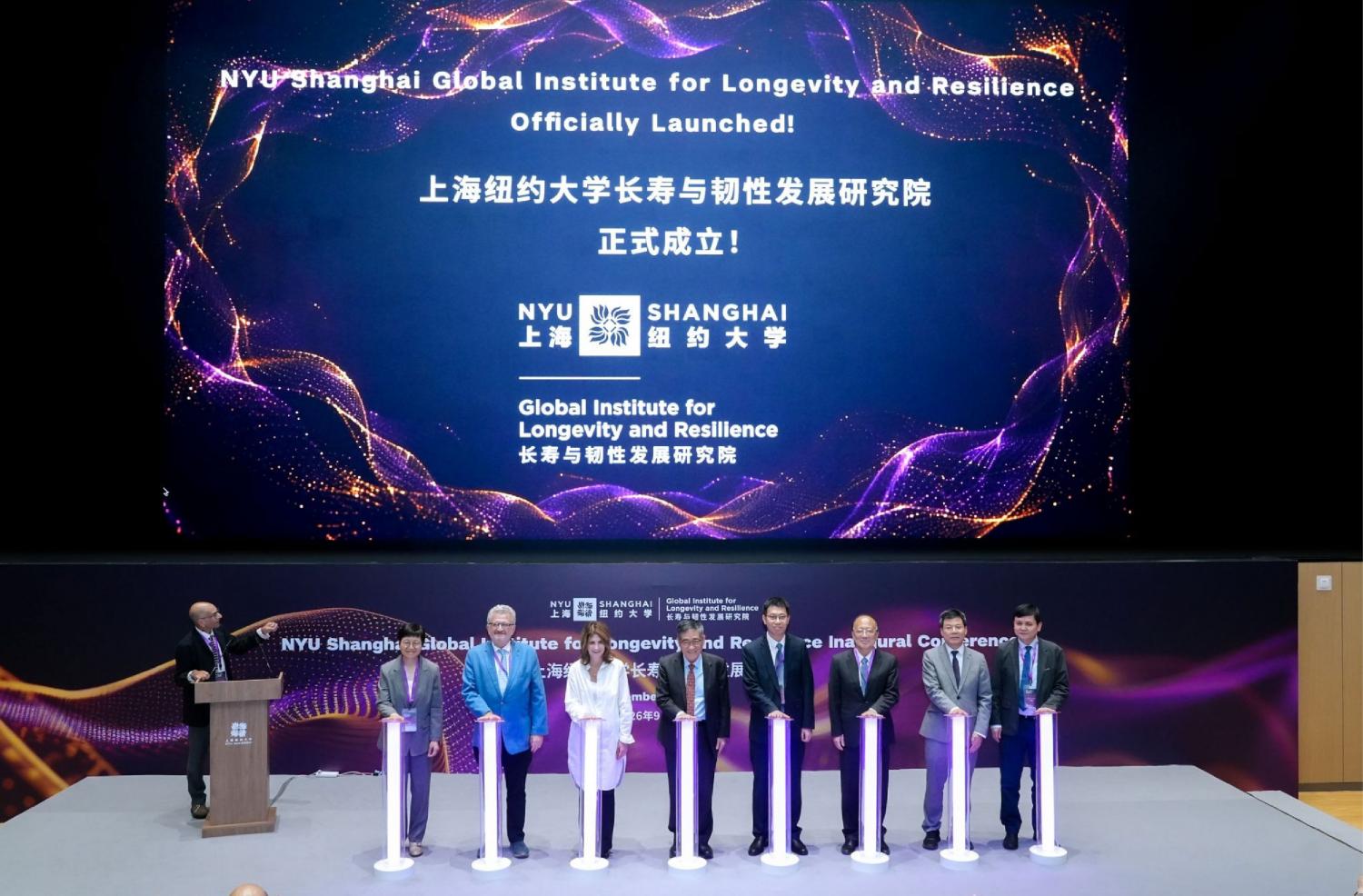
The unveiling ceremony of the Institute
The unveiling ceremony was attended by Deputy Director of the Shanghai Civil Affairs Bureau Lou Guojian; Director of the International Exchange Division, Shanghai Municipal Education Commission Zhou Qinjian; Chinese Academy of Sciences academician and president of Eastern Institute of Technology, Ningbo Chen Shiyi; Dean of the Institute of Infection and Health at Fudan University Zhang Wenhong; NYU President Linda G. Mills; NYU Shanghai Chancellor Tong Shijun; Provost Bei Wu; and NYU Abu Dhabi Vice Chancellor Fabio Piano. NYU Shanghai Vice Chancellor Jeffrey Lehman jointed remotely.
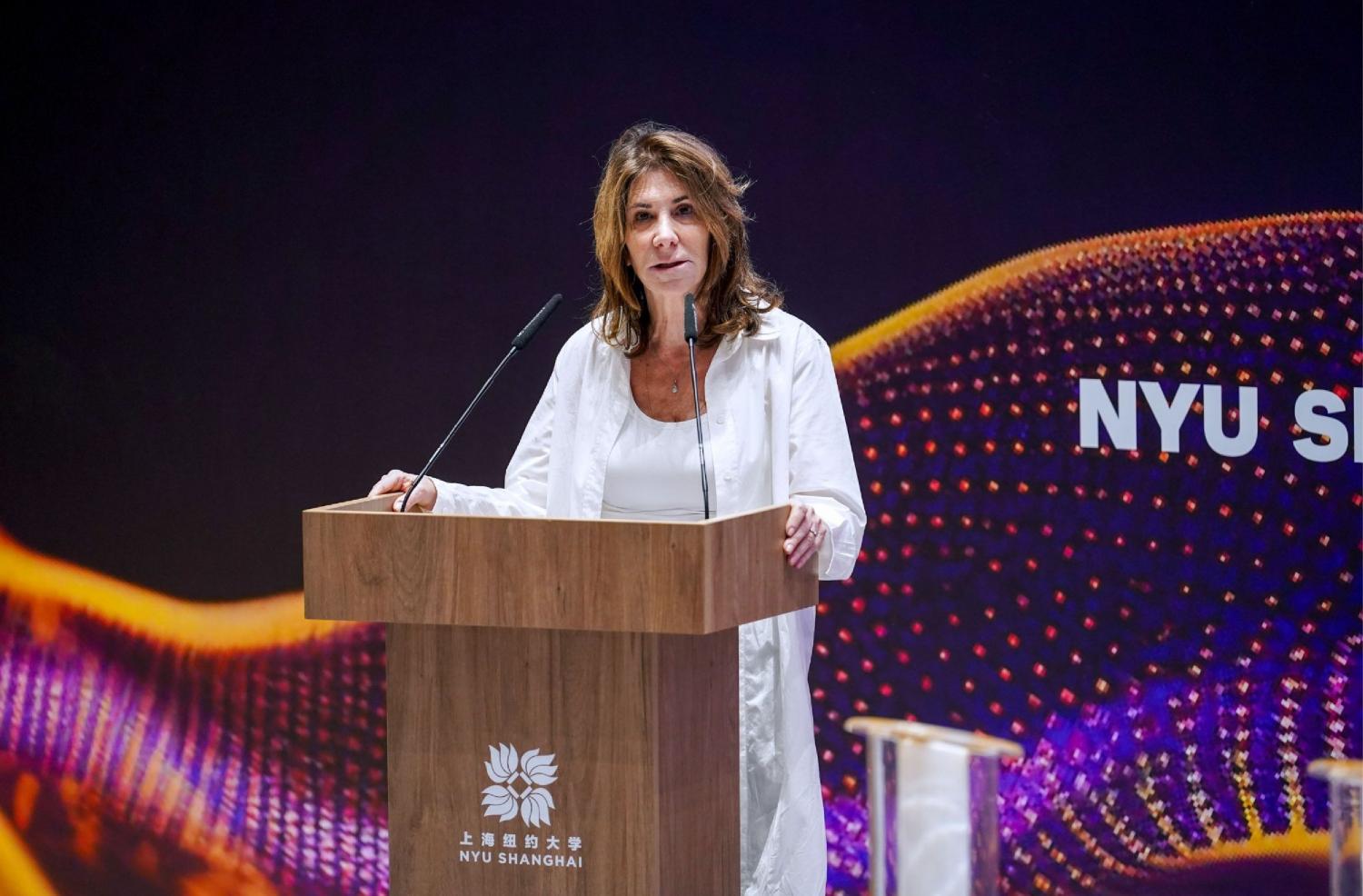
NYU President Linda G. Mills delivered opening remarks at the launch ceremony
“This is a campus that shows what can happen when scholars and students from different backgrounds come together around questions that transcend national and disciplinary boundaries,” said NYU President Linda G. Mills at the launch ceremony.
NYU Shanghai Provost and Distinguished Global Professor of Public Health Bei Wu, who was appointed the founding director at the unveiling ceremony, said the Institute reflects the needs of a longevity society for more than just better healthcare, but also resilient systems that work together.
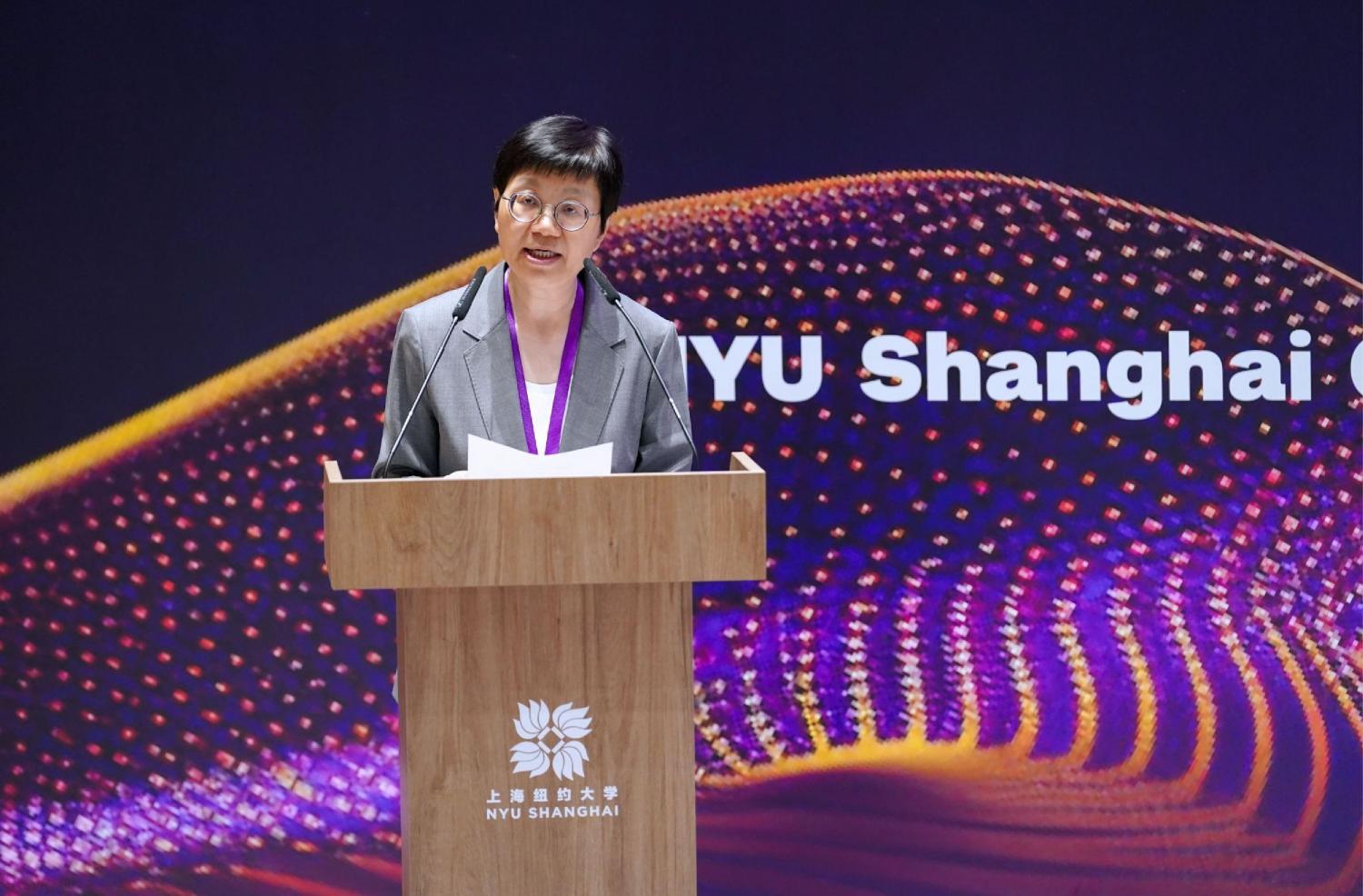
NYU Shanghai Provost and Distinguished Global Professor of Public Health Bei Wu spoke as the founding director of the Institute
“Our goal is to bring together the strengths that already exist across NYU Shanghai and the wider NYU community and connect them with partners in Shanghai, China, and around the world,” she said. “By bringing these perspectives together, we can better understand who is most vulnerable and more importantly, what can be done.”
Speakers and guests noted that longer lives and population aging are reshaping demographics, social protection, and economic growth. They said the new Institute builds on NYU Shanghai’s strengths to advance interdisciplinary research and sustainable development, while connecting expertise across disciplines and regions to explore resilient cities and digital technologies that strengthen social resilience.
The Institute’s International Advisory Board includes a host of prominent scholars and experts from China and abroad, including NYU Shanghai Vice Chancellor Jeffrey Lehman serving as chairChinese Academy of Sciences academician and president of Eastern Institute of Technology, Ningbo, Chen Shiyi; Volatility Institute at NYU Shanghai Director and 2003 Nobel Laureate in Economics Robert Engle; Peking University Center for Public Health and Epidemic Preparedness and Response Director Li Liming; global health think tank ACCESS Health International Chair and President William A. Haseltine; Tsinghua University Professor of Economics and former Dean of its School of Economics and Management Qian Yingyi; and Fudan University Institute of Infection and Health Director Zhang Wenhong.
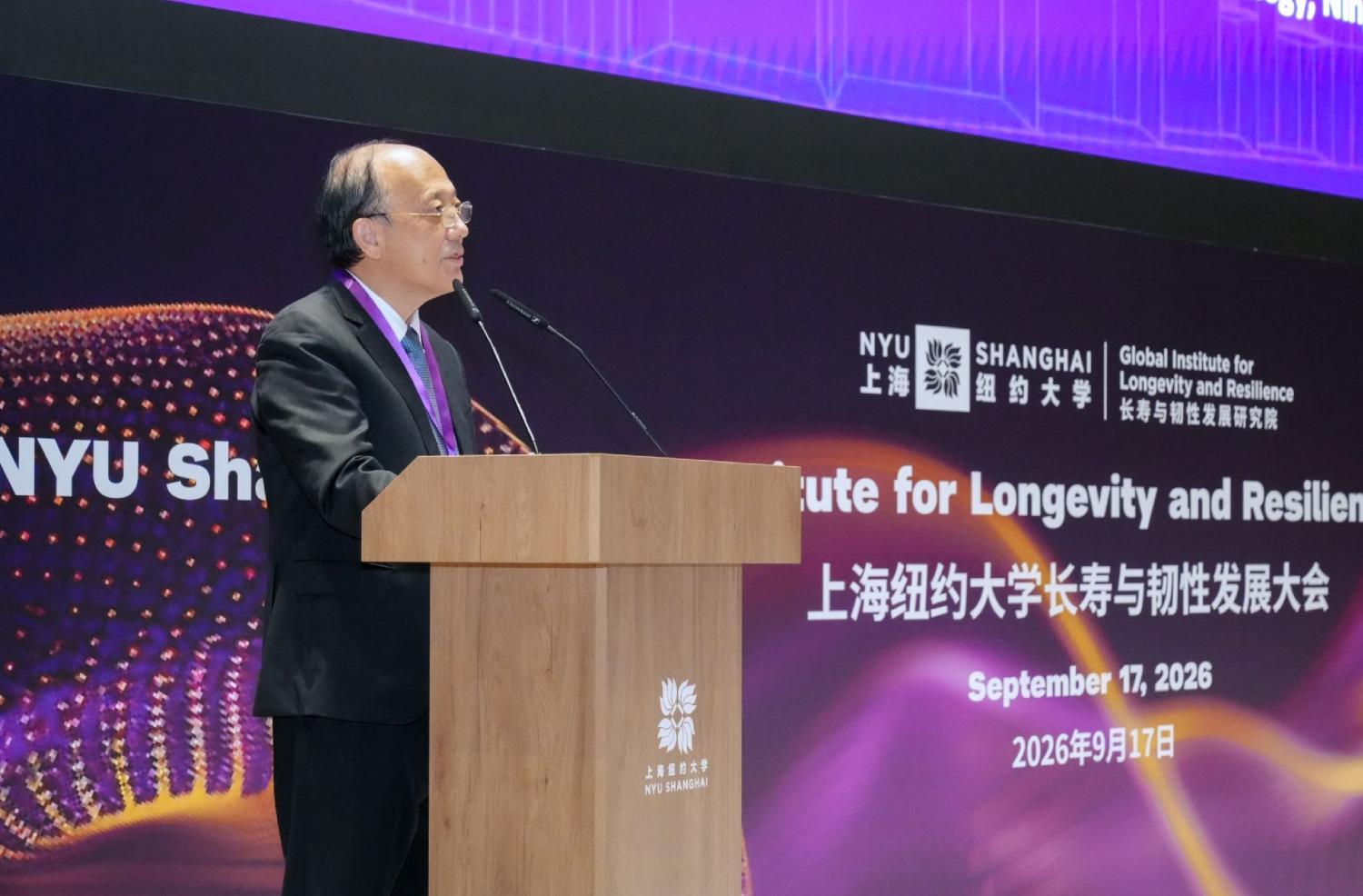
Chinese Academy of Sciences academician Chen Shiyi, president of Eastern Institute of Technology, Ningbo, delivered remarks on behalf of the Institute’s International Advisory Board.
Chinese Academy of Sciences academician Chen Shiyi, president of Eastern Institute of Technology, Ningbo, delivered remarks on behalf of the Board, saying he welcomed the Institute’s launch as a timely response to the opportunities and challenges of longer lives. He stressed that healthy longevity depends not only on medicine and public health, but also on housing, transport, technology and the urban environment, underscoring the need for interdisciplinary research. Chen also said research grounded in China can contribute to international scholarship.
The day-long conference featured four parallel forums corresponding to each of the Institute’s core research areas. Discussions ranged from eldercare systems, healthy aging, and intergenerational relations to age-friendly cities, climate risk, long-term care, and longevity finance. Participants also examined the potential of digital medicine to transform health and care for older adults, alongside recurring concerns about ethics, equity, and digital exclusion.
In the afternoon, two keynote lectures turned the attention to cutting-edge research in healthy longevity and international interdisciplinary collaboration.
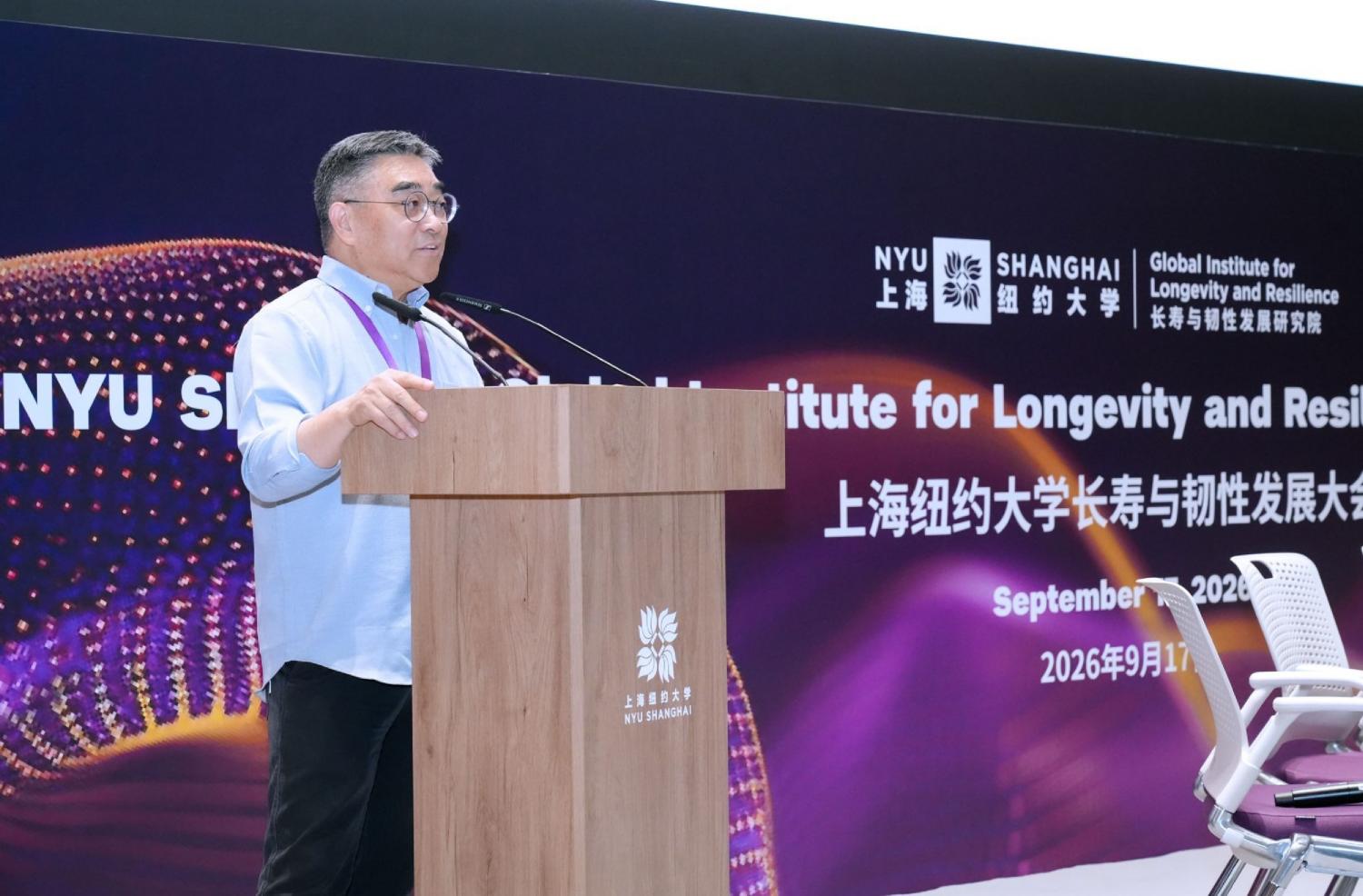
Peking University Boya Distinguished Professor and Dean of the Institute for Global Health and Development Liu Guoen delivered a keynote speech.
In his keynote, Peking University Boya Distinguished Professor and Dean of the Institute for Global Health and Development Liu Guoen challenged the conventional view of population aging as mainly an economic burden, arguing that longer, healthier lives can also create social and economic value. He called for policies and institutions to adapt to rising life expectancy and the realities of a longevity society.
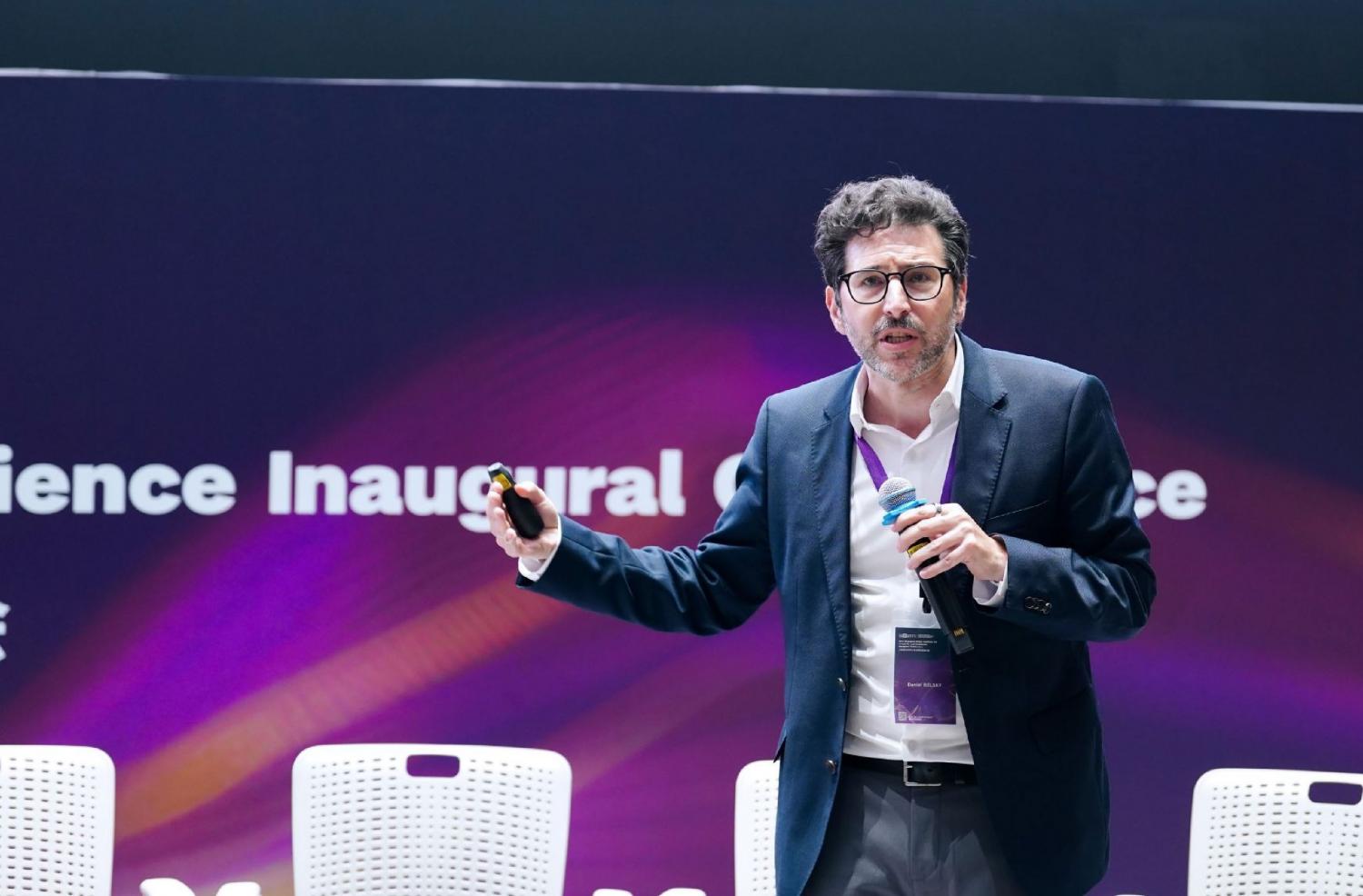
Columbia University Mailman School of Public Health Associate Professor of Epidemiology Daniel Belsky delivered a keynote address at the event.
Columbia University Mailman School of Public Health Associate Professor of Epidemiology Daniel Belsky delivered a keynote on recent advances in measuring biological aging, understanding the mechanisms of aging, and developing interventions.
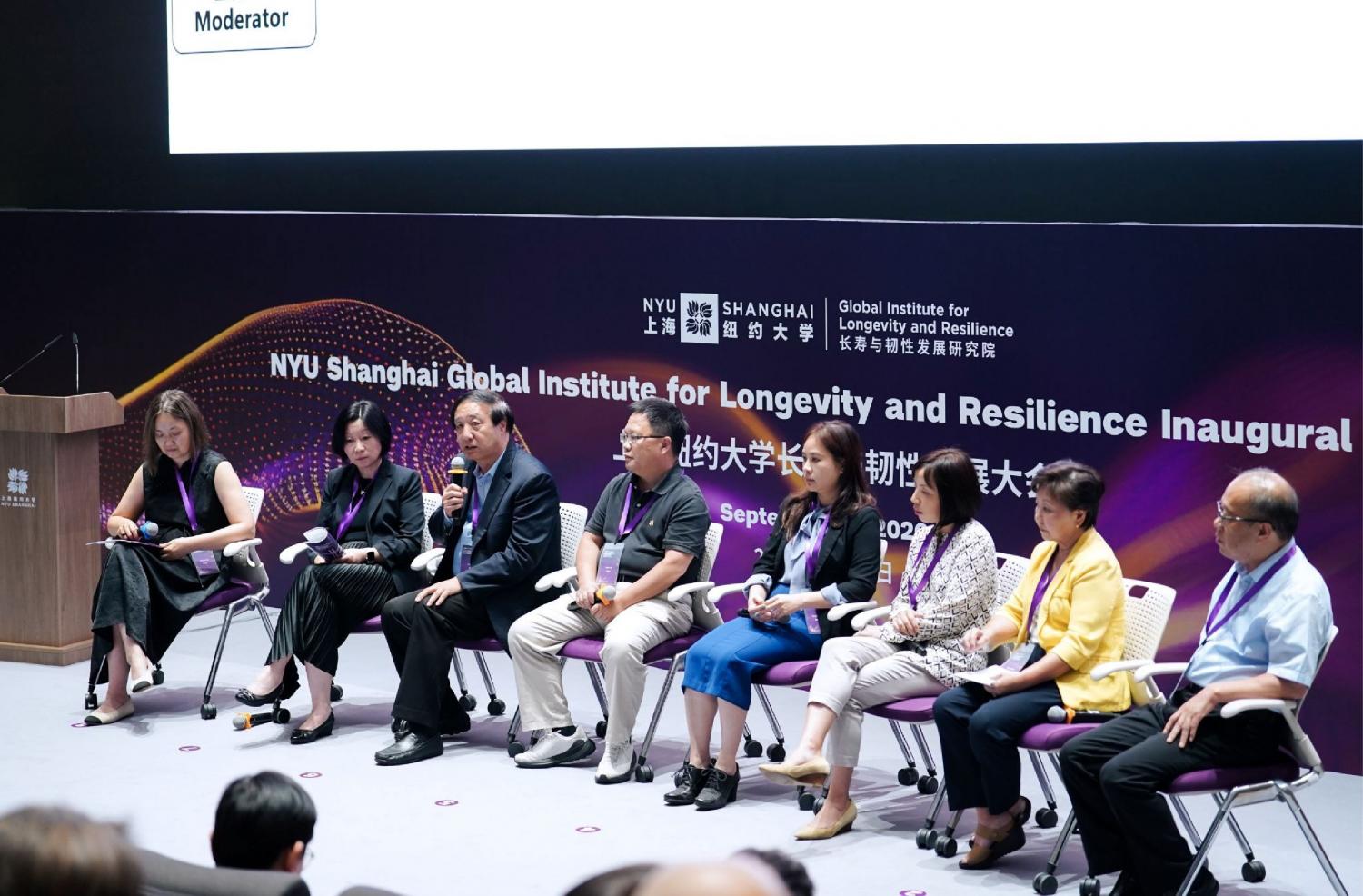
Guests at the first roundtable, “Healthy Longevity and Resilient Societies: Research Frontiers, Comparative Evidence, and Global Collaboration” (from left to right): NYU Professor of Social Work Xu Qingwen; Johns Hopkins University Hopkins Population Center Director Chen Feinian; Renmin University of China Institute of Gerontology Director Du Peng; Southern University of Science and Technology College of Engineering Assistant Dean He Zhihai,; University of Hong Kong Department of Urban Planning and Design head He Shenjing; King’s College London Institute of Gerontology Director Yang Wei; A*STAR’s Institute for Human Development and Potential Director of Social Sciences Jean Yeung: and East China Normal University National Experimental Base for Smart Elderly Care and Social Governance Director Zhong Renyao.
Two interdisciplinary roundtable discussions showcased experts in public health, demography, urban science, health economics, finance, and engineering who discussed international collaboration in longevity research, interdisciplinary research methods, and how research findings can be translated into policy and practice.
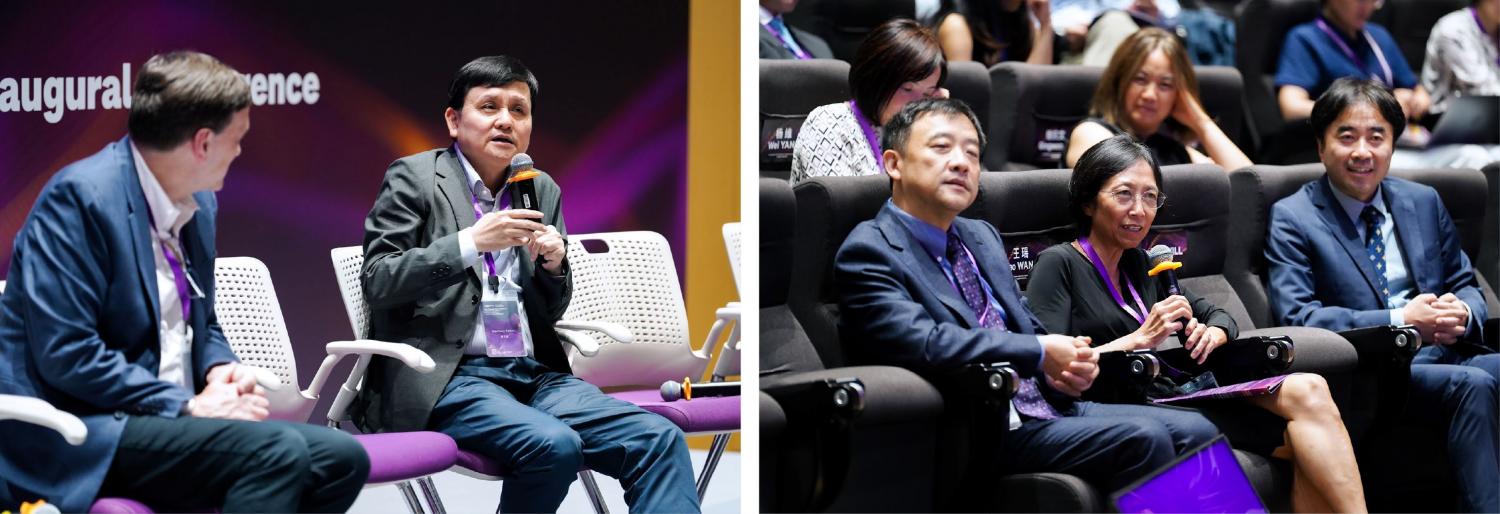
(from left) NYU Shanghai Dean of Arts and Sciences David Atwill and Dean of the Institute of Infection and Health at Fudan University Zhang Wenhong closed the event with a fireside chat; Dean of Business Chen Yuxin, Dean of Computer Science, Data Science, and Engineering Yao Wang, and Director of the Shanghai Key Laboratory of Urban Design Guan Chenghe joined the discussion.
The closing fireside chat between NYU Shanghai Dean of Arts and Sciences David Atwill and Dean of the Institute of Infection and Health at Fudan University Zhang Wenhong, explored future priorities for research and international collaboration in longevity and resilience. Dean of Business Chen Yuxin, Dean of Computer Science, Data Science, and Engineering Yao Wang, and Director of the Shanghai Key Laboratory of Urban Design Guan Chenghe joined the discussion.
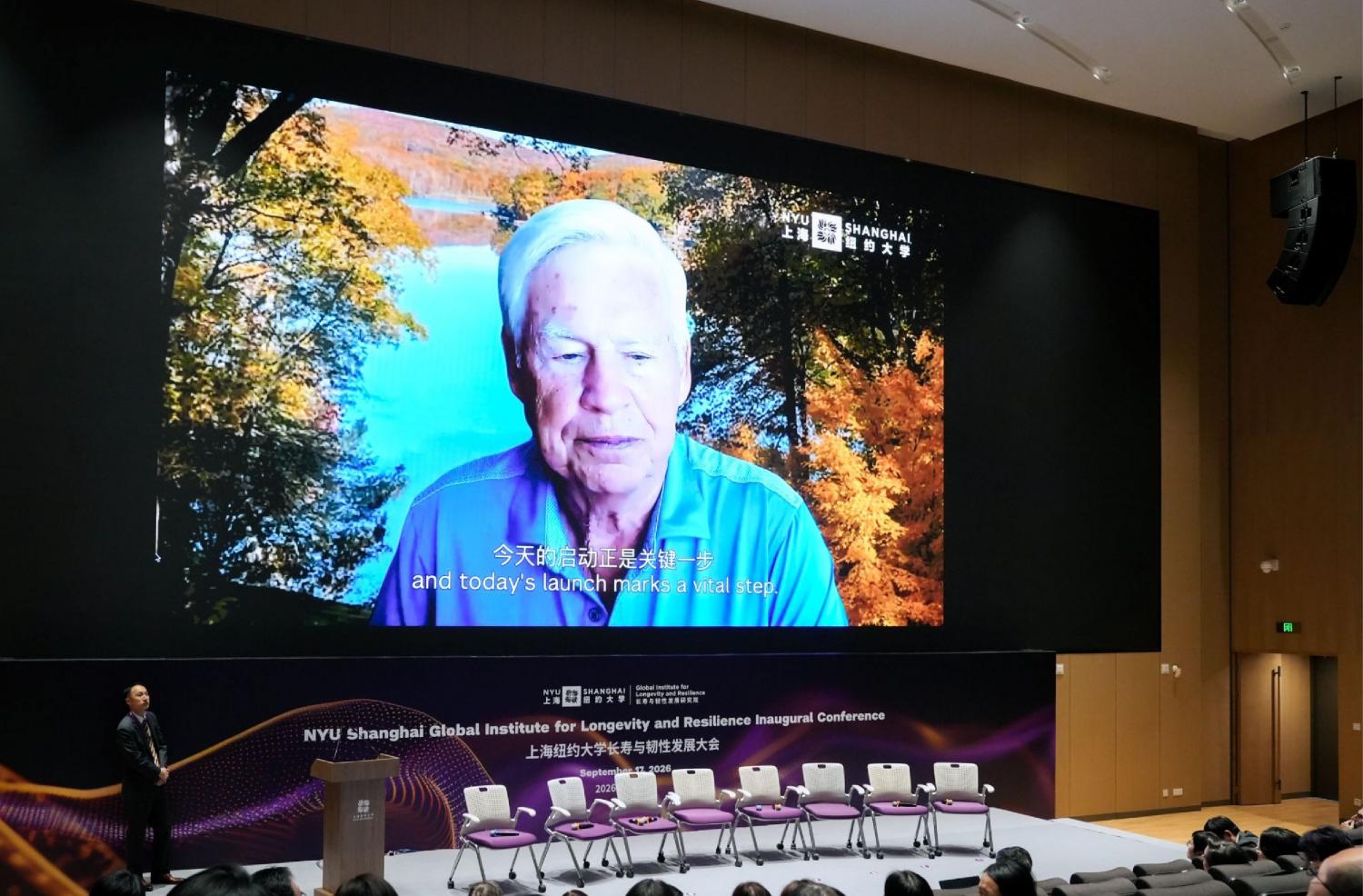
2003 Nobel laureate in Economics Robert Engle closed the event
The conference concluded with pre-recorded remarks from 2003 Nobel laureate in Economics Robert Engle, director of the Volatility Institute at NYU Shanghai.